
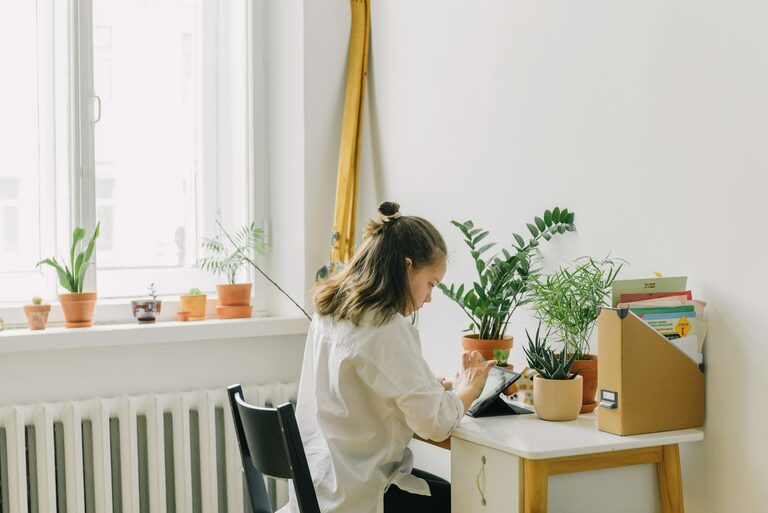
Creating a home office that balances comfort and productivity can transform your work-from-home experience. Whether you’re new to remote work or looking to improve your current setup, designing a space that supports focus and well-being is essential. This guide shares practical tips to help you build an efficient and inviting home office.
Find the Right Location
Choosing the ideal spot for your home office is the first step. Consider these factors:
– Privacy: Select a space with minimal distractions, away from high traffic or noisy areas.
– Natural Light: Aim for a spot near windows to benefit from daylight, which can improve mood and focus.
– Space: Ensure there’s enough room for your desk, chair, and storage without feeling cramped.
– Accessibility: Pick a location you’ll be comfortable entering and leaving during your work hours.
If you lack a dedicated room, a quiet corner or even a well-organized section of your living room can work.
Invest in Ergonomic Furniture
Comfortable furniture supports posture and reduces fatigue, which promotes productivity.
– Ergonomic Chair: Choose a chair with adjustable height, lumbar support, and comfortable cushioning. Good back support helps prevent discomfort during long hours.
– Desk: Your desk should provide enough surface area for your computer, documents, and any other essentials. Adjustable-height desks offer flexibility to alternate between sitting and standing.
– Monitor Placement: Position your monitor at eye level, about an arm’s length away, to reduce neck strain.
– Accessories: Consider a keyboard tray or wrist rest to maintain neutral hand positions.
Organize for Efficiency
Clutter can distract and slow you down. Here are ways to keep things organized:
– Declutter Regularly: Keep only necessary items on your desk.
– Storage Solutions: Use shelves, drawers, or filing cabinets to keep papers and supplies tidy.
– Cable Management: Employ clips or ties to prevent tangled cords.
– Desk Layout: Arrange frequently used items within arm’s reach.
A clean and organized space helps maintain focus and speeds up your workflow.
Control Lighting and Glare
Lighting affects both comfort and focus. Proper setup includes:
– Natural Light: As mentioned, use daylight when possible but avoid direct glare on screens.
– Task Lighting: Add a desk lamp with adjustable brightness to reduce eye strain.
– Ambient Lighting: Soft background lighting creates a comfortable atmosphere.
– Monitor Brightness: Adjust your screen’s brightness and contrast for easy viewing.
Experiment with different light sources and angles to find the best combination.
Minimize Noise and Distractions
A quiet environment improves concentration.
– Noise: Use noise-cancelling headphones or white noise machines if household sounds are distracting.
– Visual Distractions: Position your desk away from windows or busy areas.
– Do Not Disturb Signals: Use signs or set boundaries with family members to signal when you need uninterrupted time.
Establishing clear work routines and boundaries helps maintain productivity.
Personalize Your Space
Adding personal touches makes your office inviting and motivating.
– Plants: Indoor plants improve air quality and create a calming effect.
– Decor: Choose artwork or photos that inspire you without overwhelming the space.
– Colors: Use colors that help you focus or boost creativity; soft blues or greens are often calming.
– Comfort Items: A cozy throw blanket or cushion can add warmth.
Balancing personalization with professionalism helps keep the space pleasant without distracting.
Optimize Technology
Reliable technology supports smooth workflows.
– Fast Internet: Ensure your Wi-Fi or wired connection can handle video calls and file sharing without lag.
– Peripherals: Use quality keyboards, mice, and headsets suited to your needs.
– Backup: Have a backup solution for files, such as cloud storage or an external hard drive.
– Software: Use productivity and organization tools that help manage tasks and time effectively.
Investing in efficient technology reduces frustration and saves time.
Establish Healthy Work Habits
A comfortable space is part of the equation; healthy habits complete the picture.
– Regular Breaks: Follow the 20-20-20 rule – every 20 minutes, look at something 20 feet away for 20 seconds to reduce eye strain.
– Movement: Stand, stretch, or take a short walk regularly to avoid stiffness.
– Hydration and Snacks: Keep water and healthy snacks nearby to stay energized.
– Routine: Set consistent start and finish times to maintain work-life balance.
Your workspace should promote both focus and well-being through good habits.
—
Designing a home office that suits your needs can make remote work enjoyable and productive. By focusing on location, furniture, organization, lighting, noise control, personalization, technology, and habits, you create a space where work flows naturally and comfort supports your success. Take the time to build your ideal home office, and you’ll likely find your workdays more fulfilling and efficient.